
aqt — Redesigning urban neighbourhoods
How must we rethink mobility in urban neighbourhoods in order to tackle the climate crisis and uphold social justice? How can the mobility transition succeed? How can we reshape urban communities together?
With their Mobility Strategy 2035 and Urban Development Plan 2040, the City of Munich aims to reduce individual car traffic and improve the quality of urban public spaces. In line with these goals the research project »aqt« explores transition pathways to neighbourhoods characterised by fewer cars and more space for people.
Research approach | Living Labs
From May 2023 to October 2023, various measures were temporarily implemented and evaluated in two neighbourhoods in Munich: »Südliche Au« and »Walchenseeplatz«. During this time, further participation formats took place in order to develop transformation paths together with research partners, municipal administration, industry, NGOs and civil society. The findings produced during the Living Lab were further developed, evaluated and discussed by summer 2024. The project period ended in October 2024.
»There needs to be a reallocation of public space; plenty of room for improvement for a much more efficient use of cars […]«
Georg Dunkel, Head of Mobility, City of Munich, June 2023
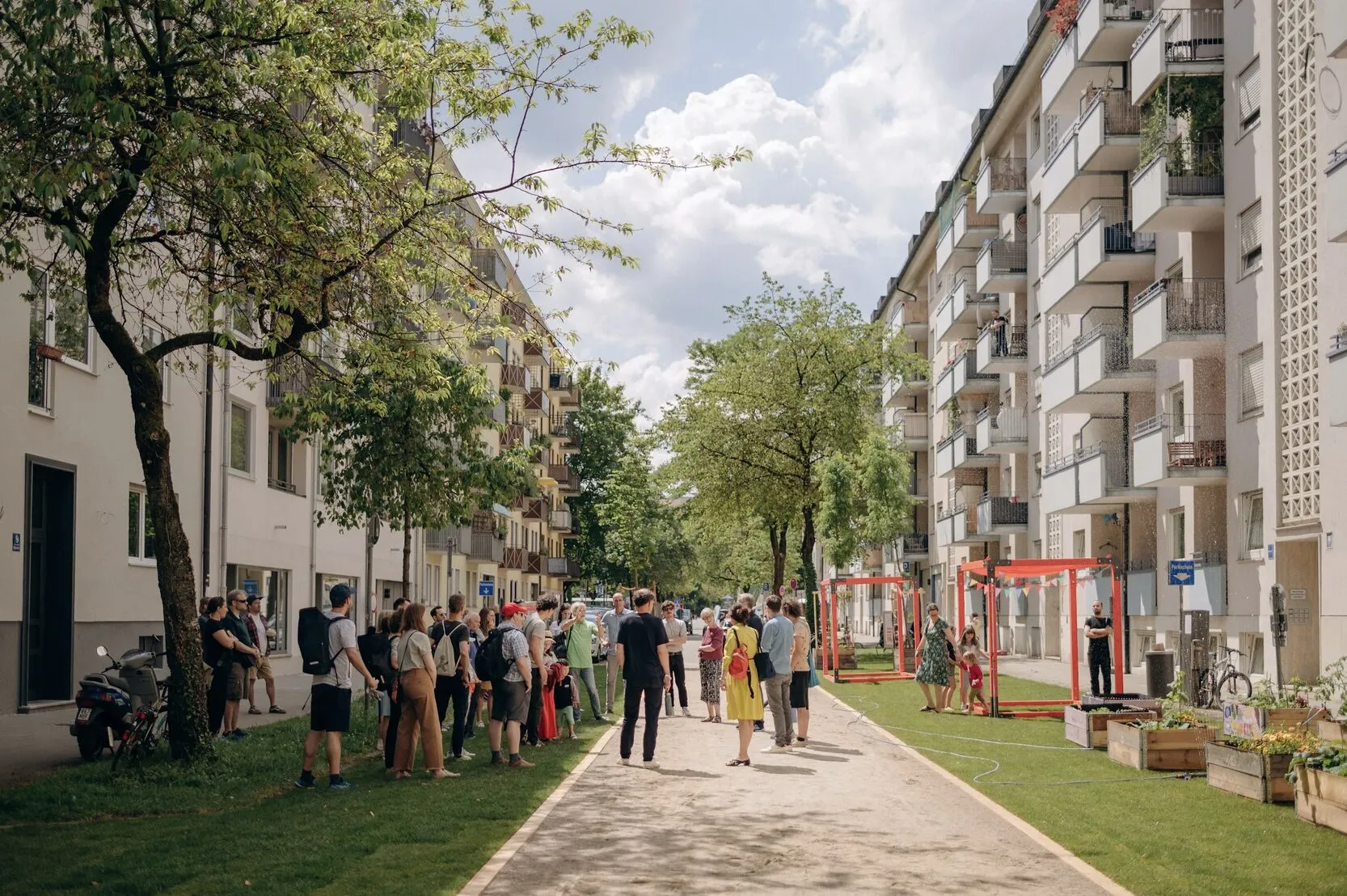
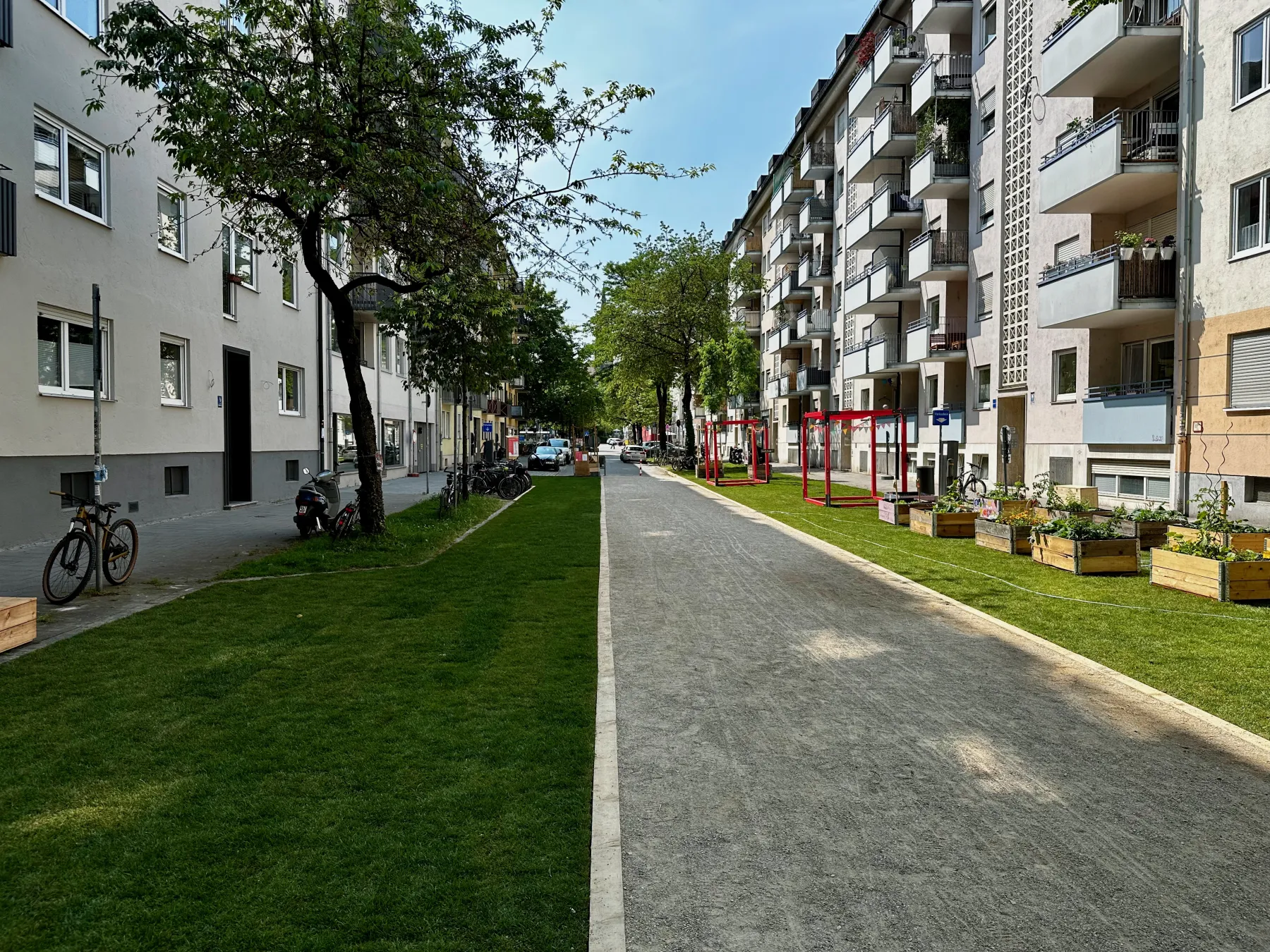
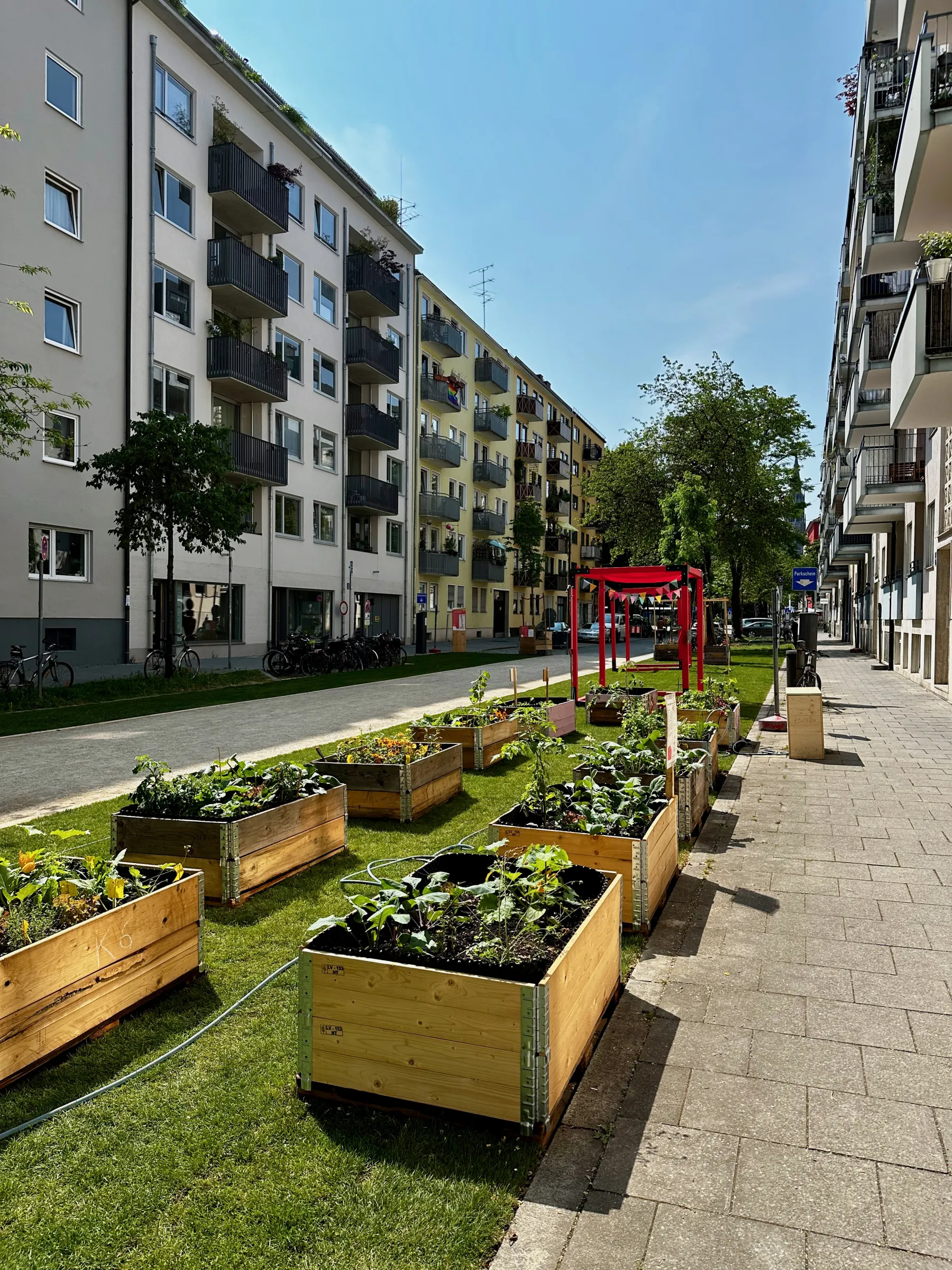
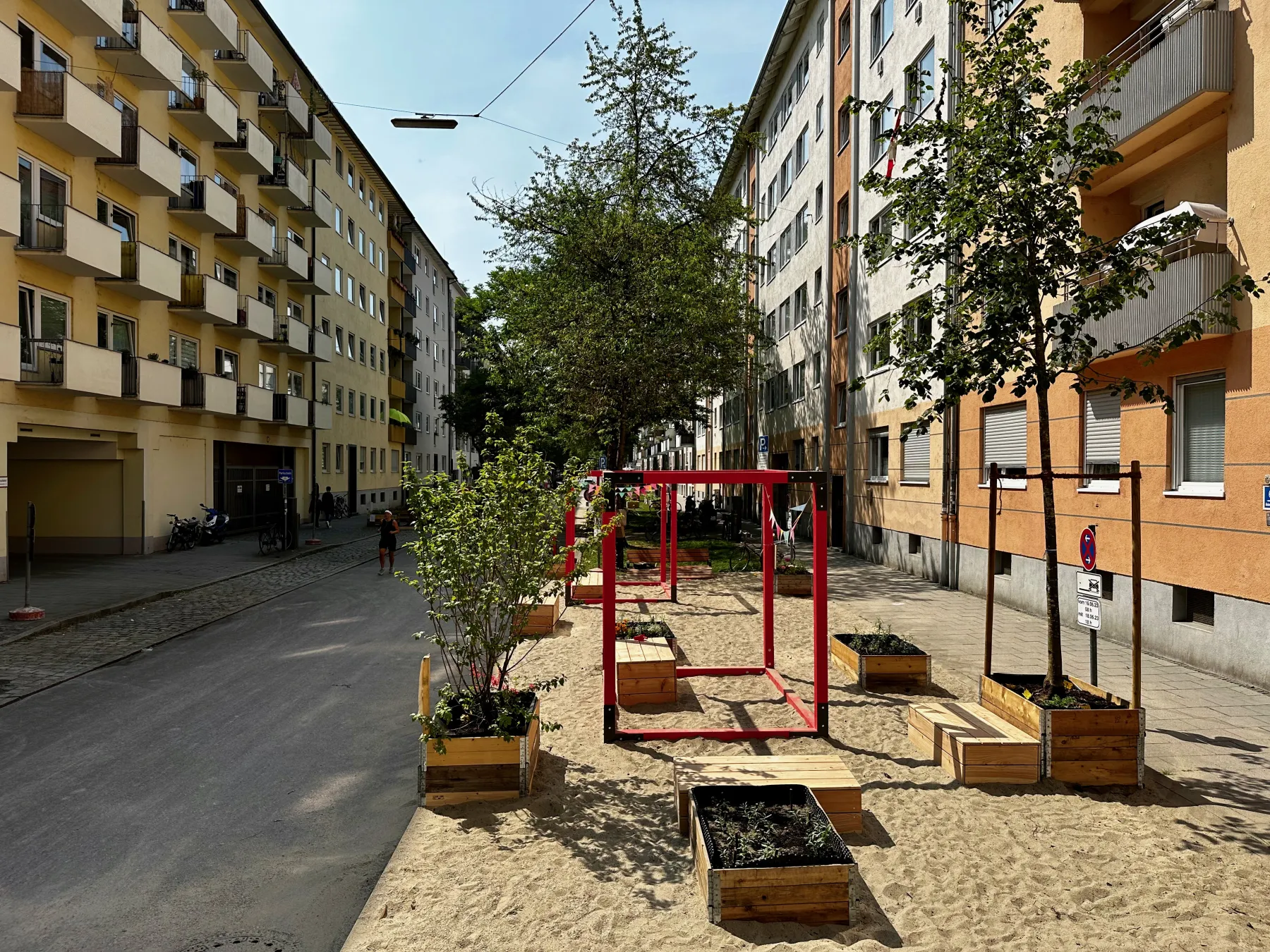
In the neighbourhood »Südliche Au« on Schlotthauerplatz and Edlingerplatz and Kolumbusstraße, the urban space was redesigned with lawn, raised beds and a sandpit instead of asphalt, bike racks and seating instead of parking spaces. Over 5 months, residents could experience their neighbourhood with various recreation areas as well as new open-pore road surface to keep the city cooler.
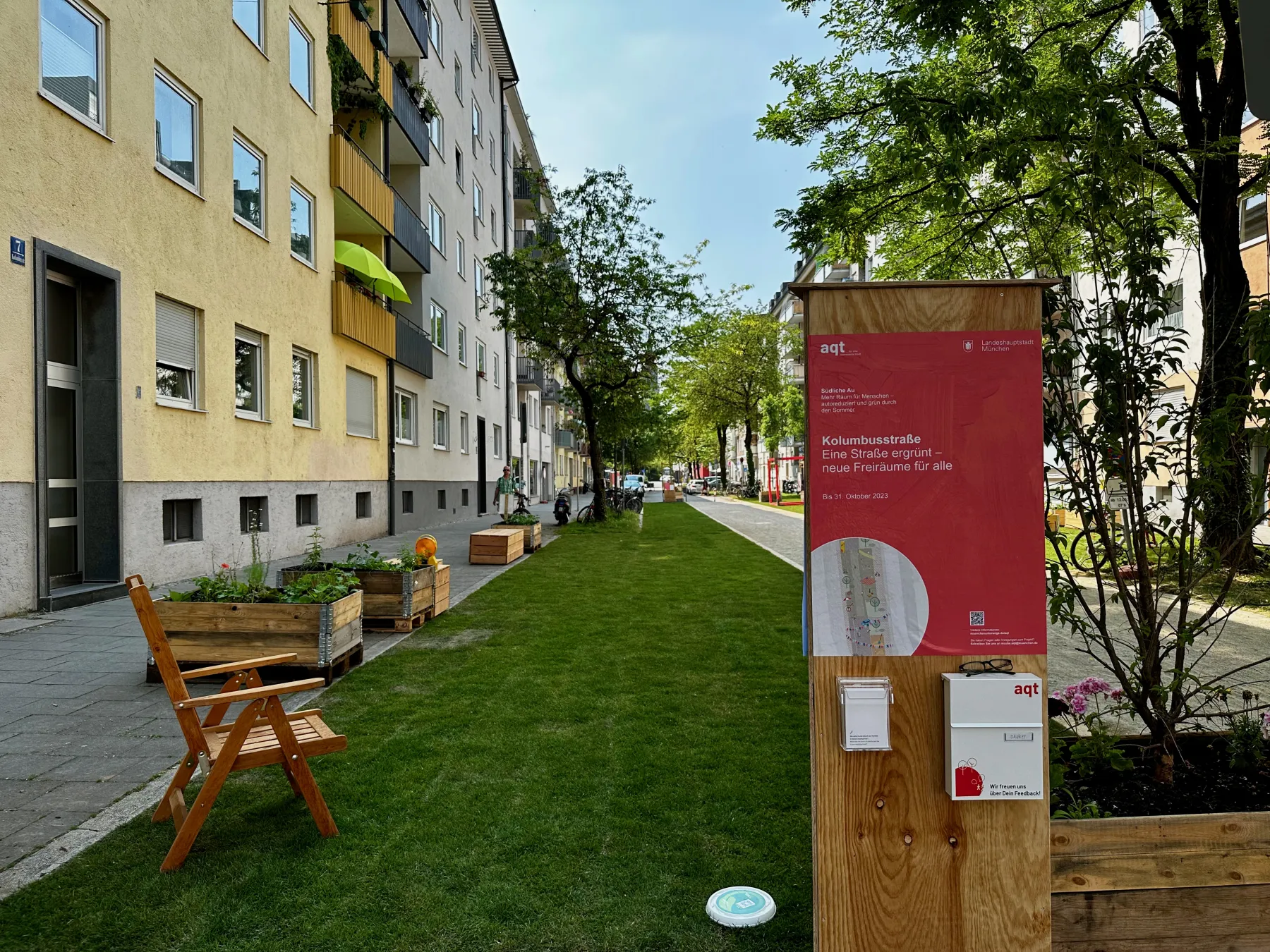
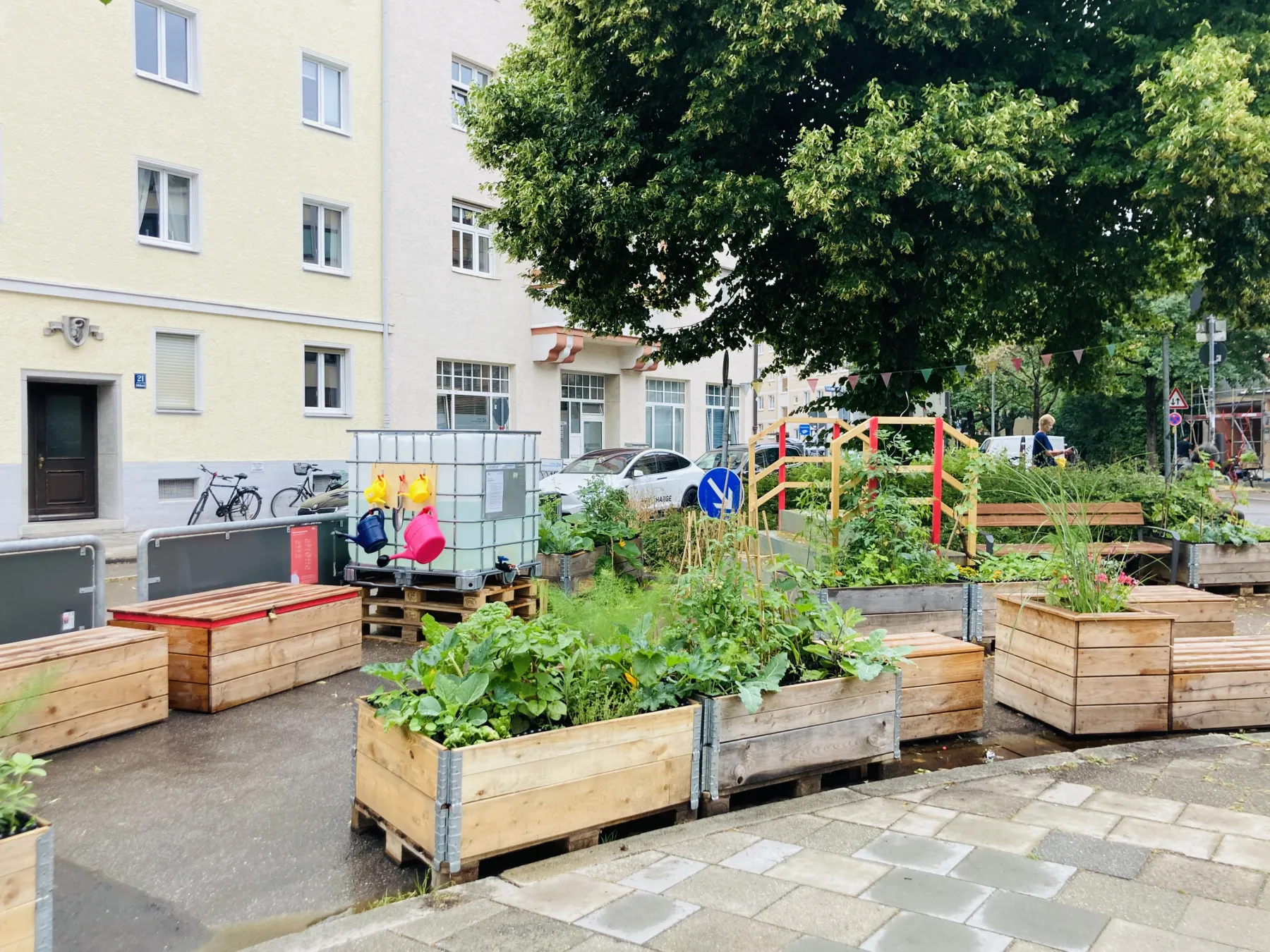
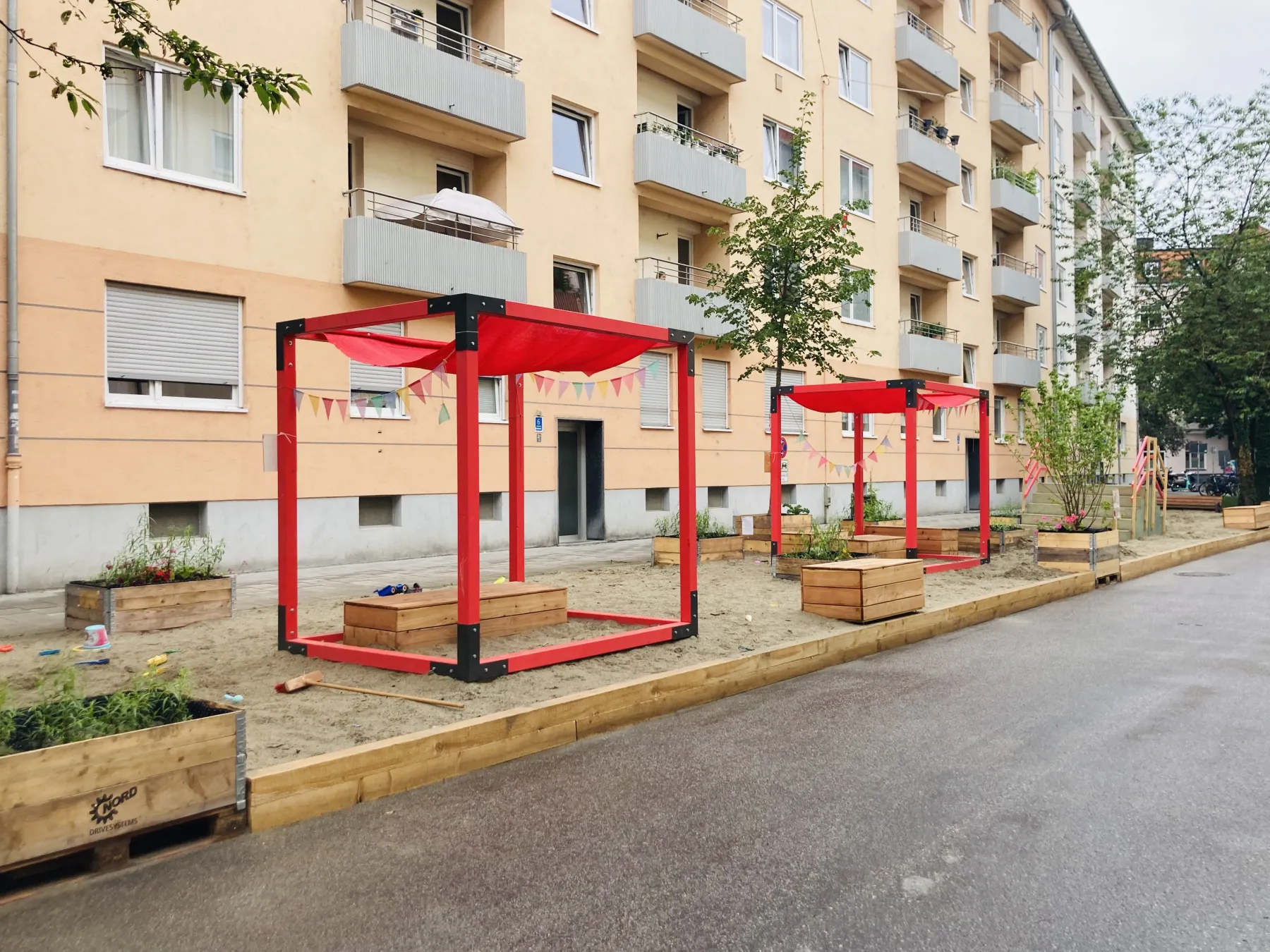
The residents played an important role in this project as experts on the local mobility situation and as a source of feedback. Through its participatory and transdisciplinary character, the aqt project created a platform for the reorganisation, negotiation and transformation of public space in the selected neighbourhoods.
This change should be perceived by the residents as something they can experience and shape.
Feedback on everyday needs from citizens is an important input for urban planners and policy makers, so that incentives for behavioural change can be adapted successfully to other neighbourhoods.
Futures Workshop
Living labs are a great research tool to test concrete measures in real-life and get in touch with habits, needs, local culture, and revealed preferences. Confronting people with an alternative reality produces great learnings about what works and what does not – fast. However, there is a downside. People get entangled in the nitty-gritty details of their new everyday life. And sometimes this makes it hard to imagine what could be possible if all the problems – that come to life in the early phase of a new situation – were resolved over time.
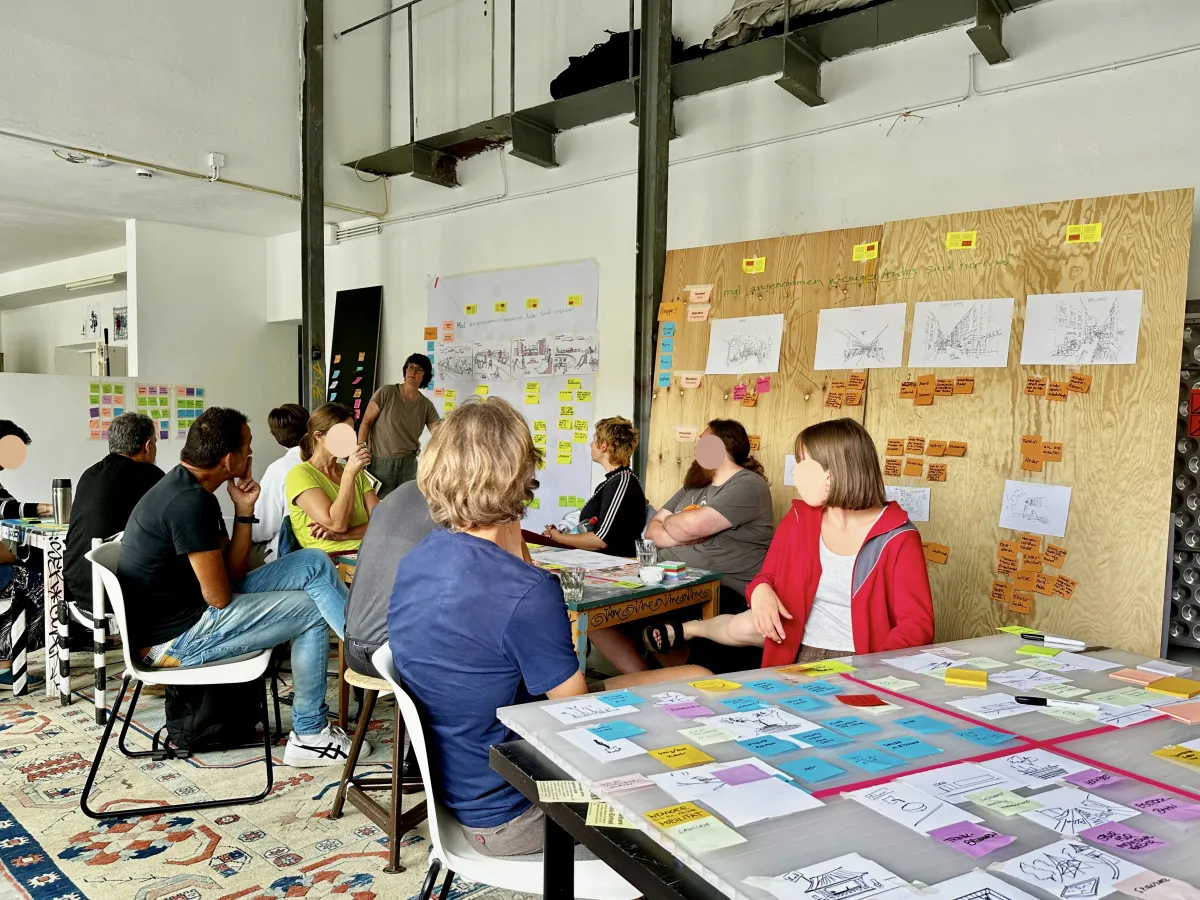
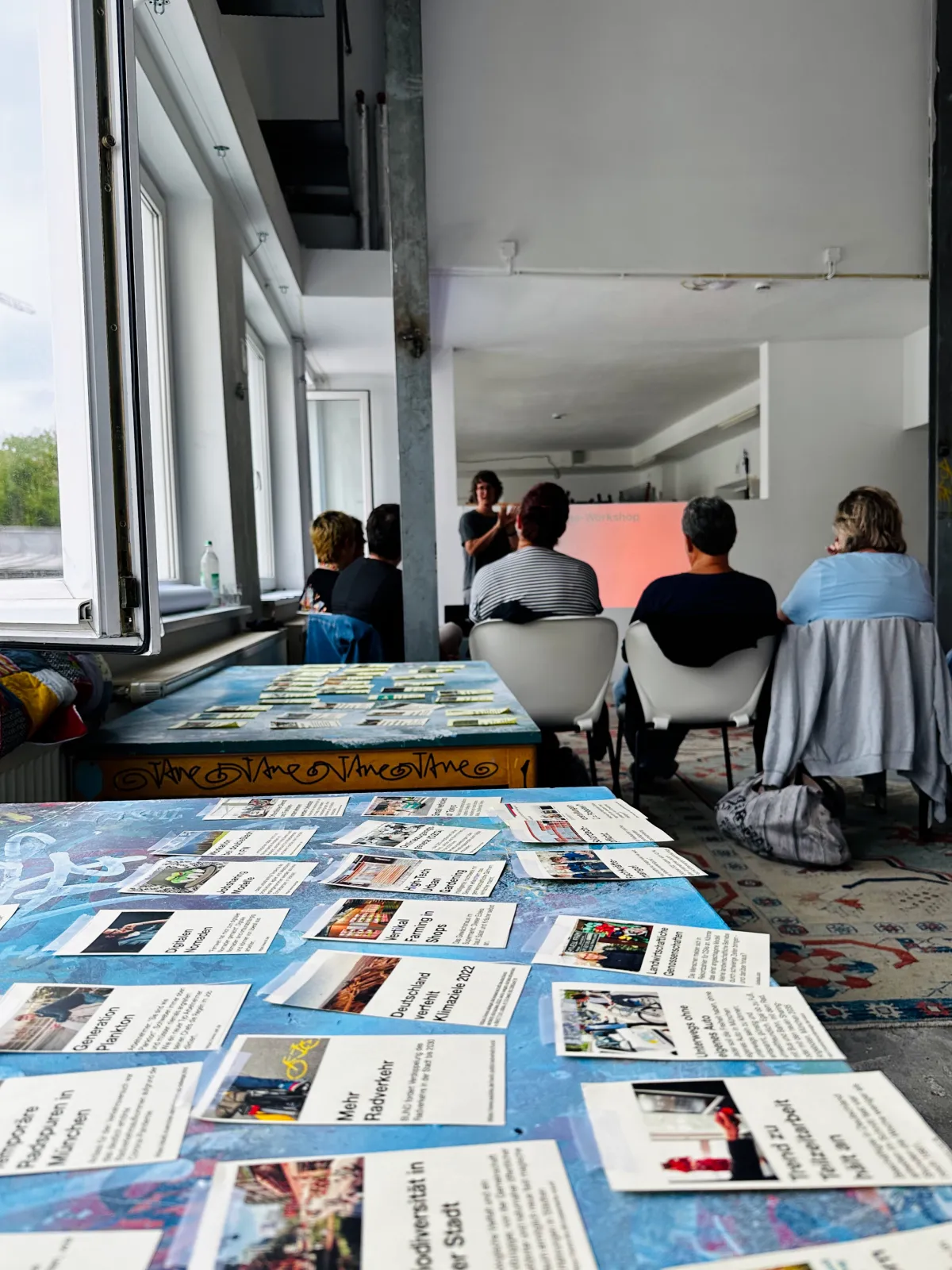
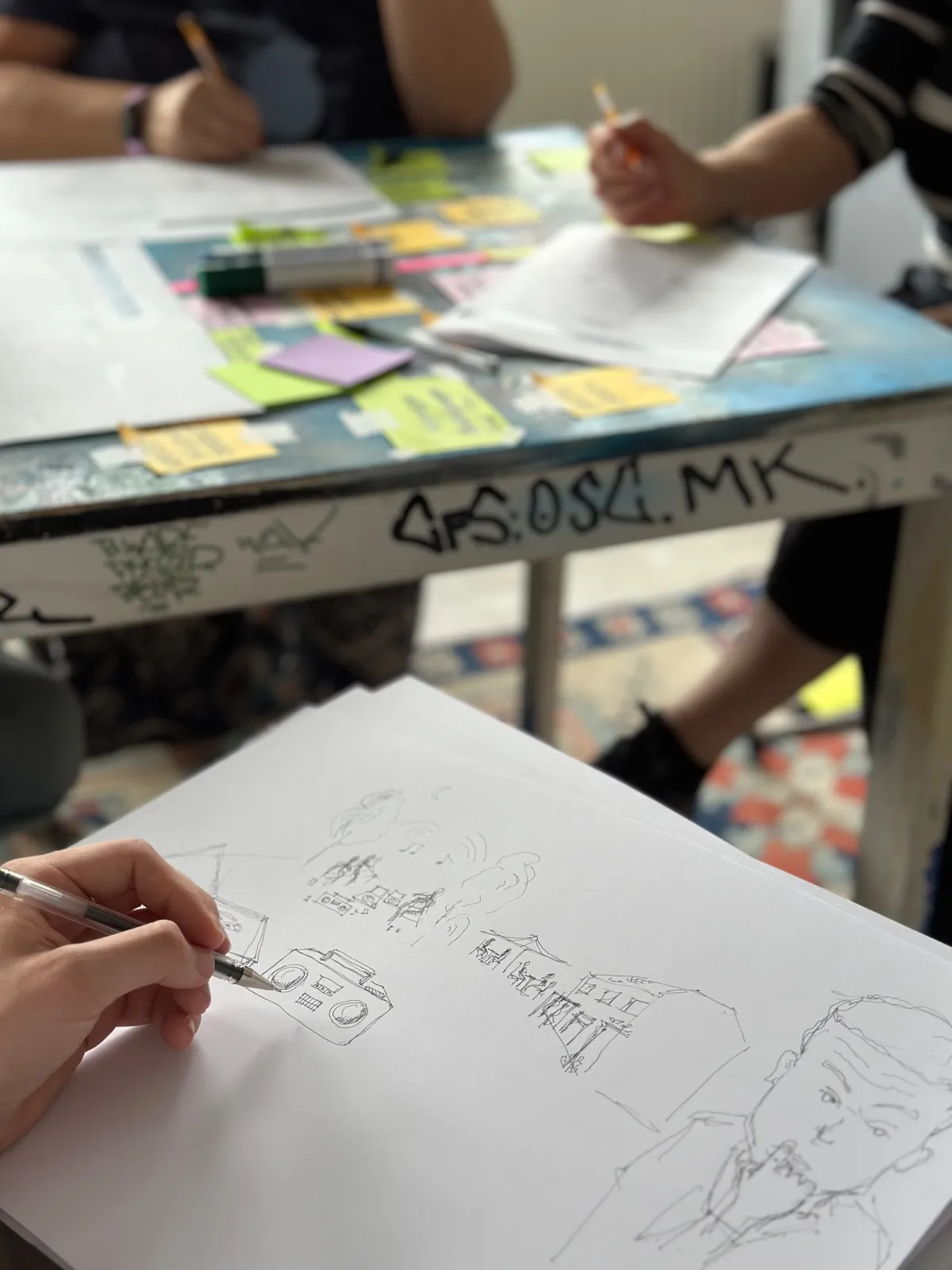
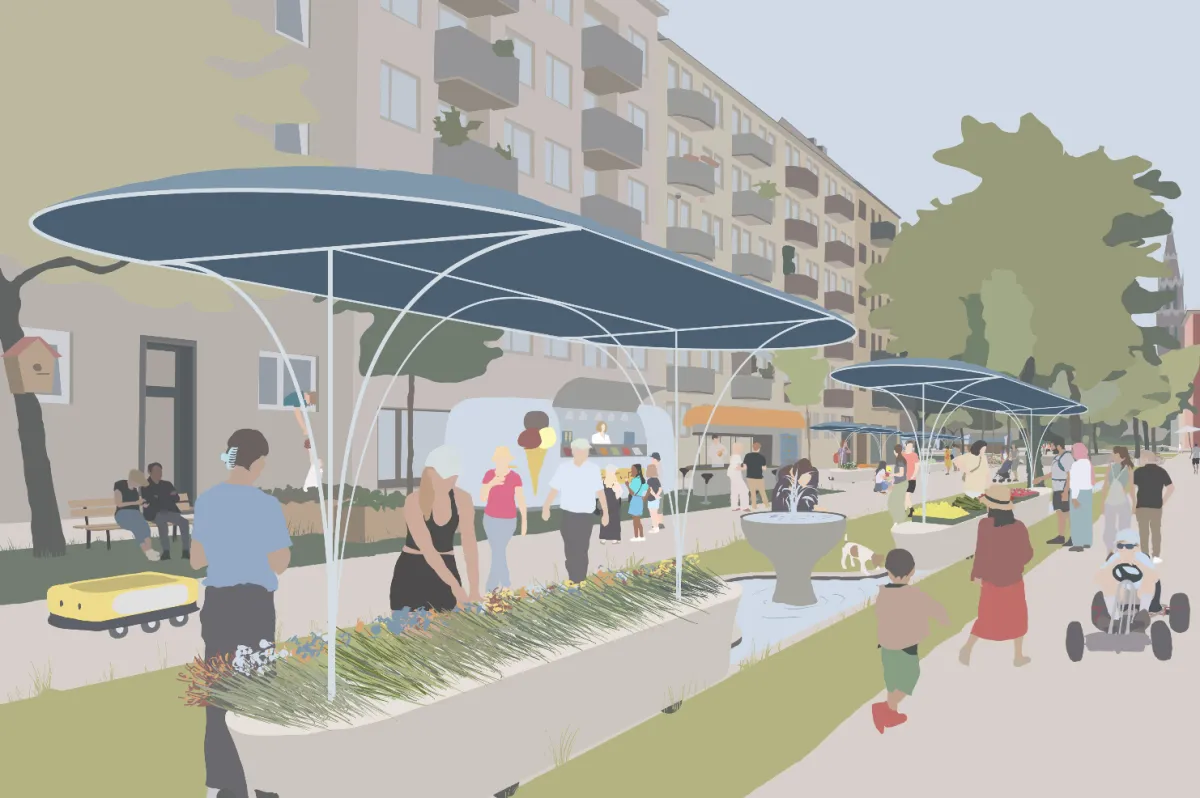
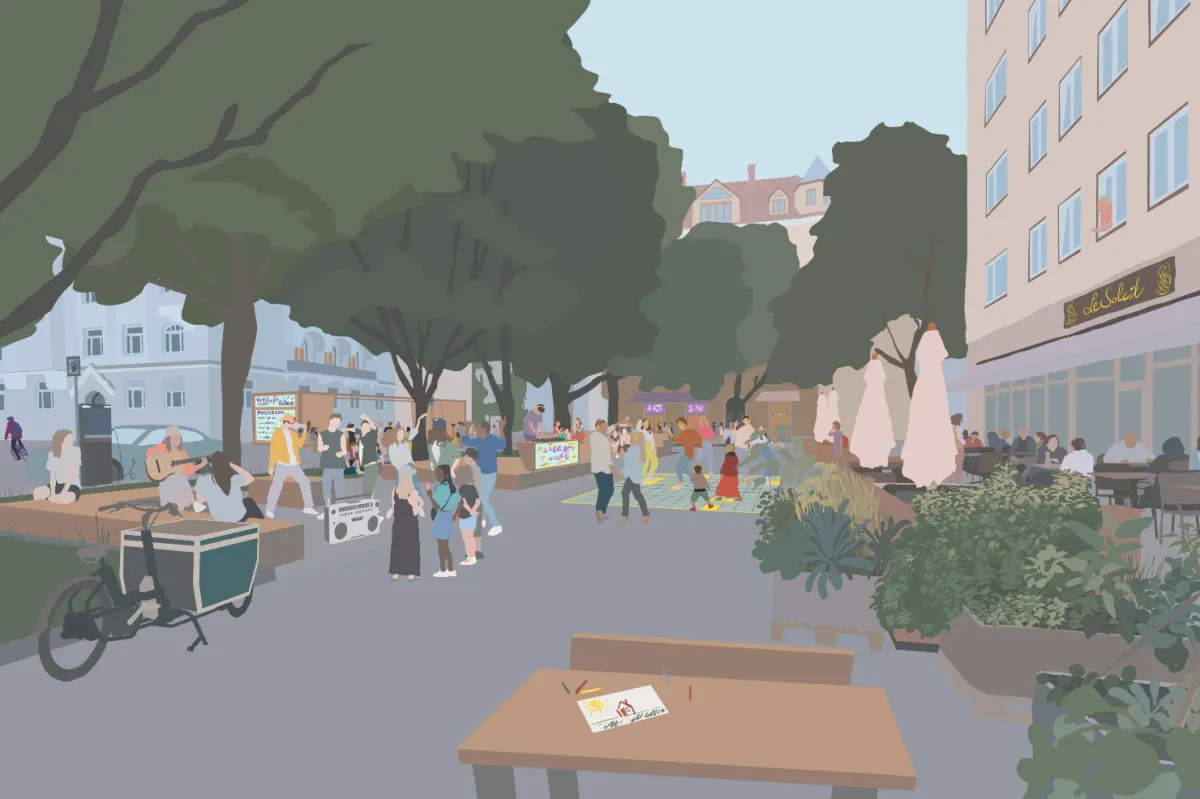
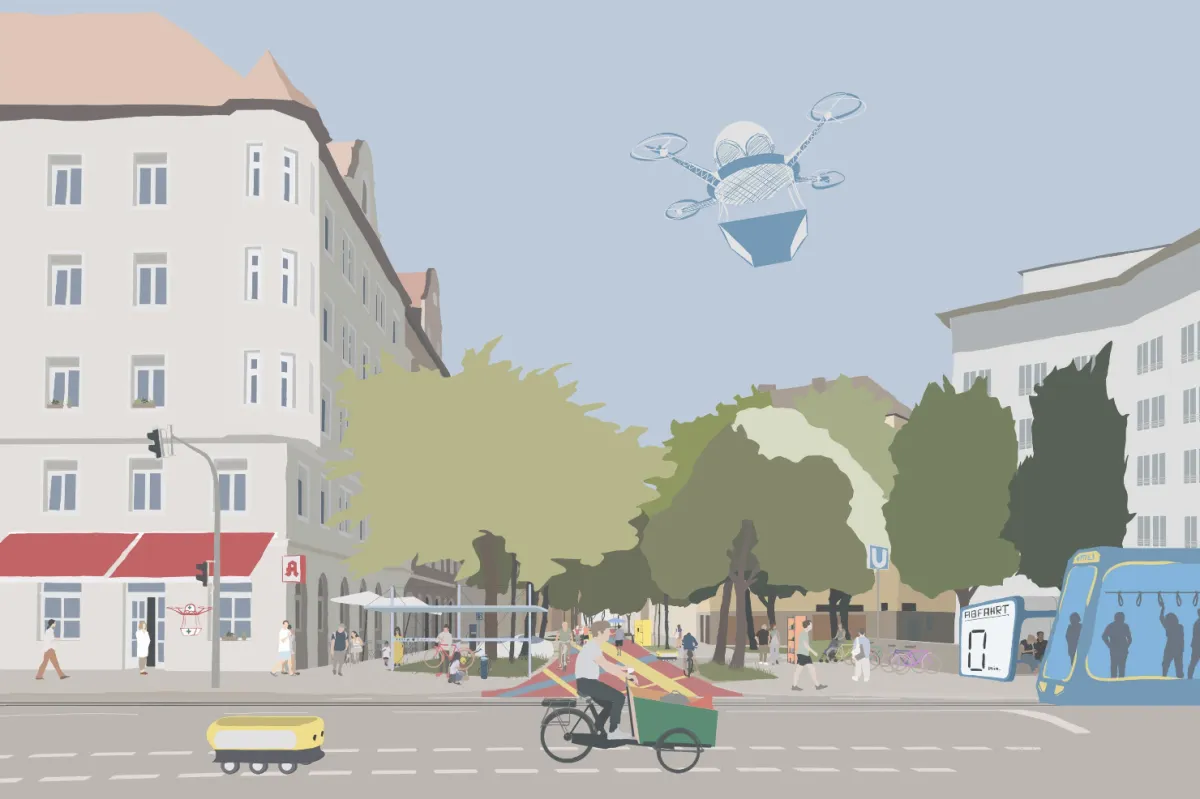
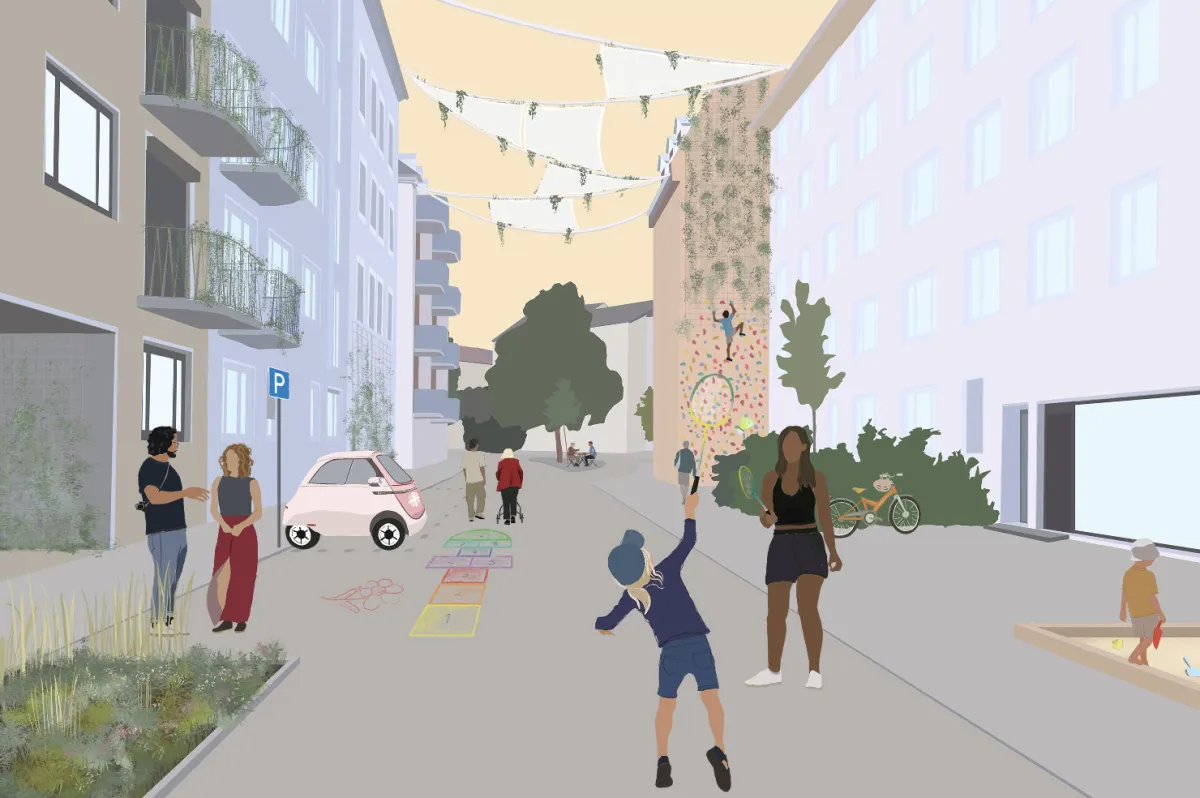
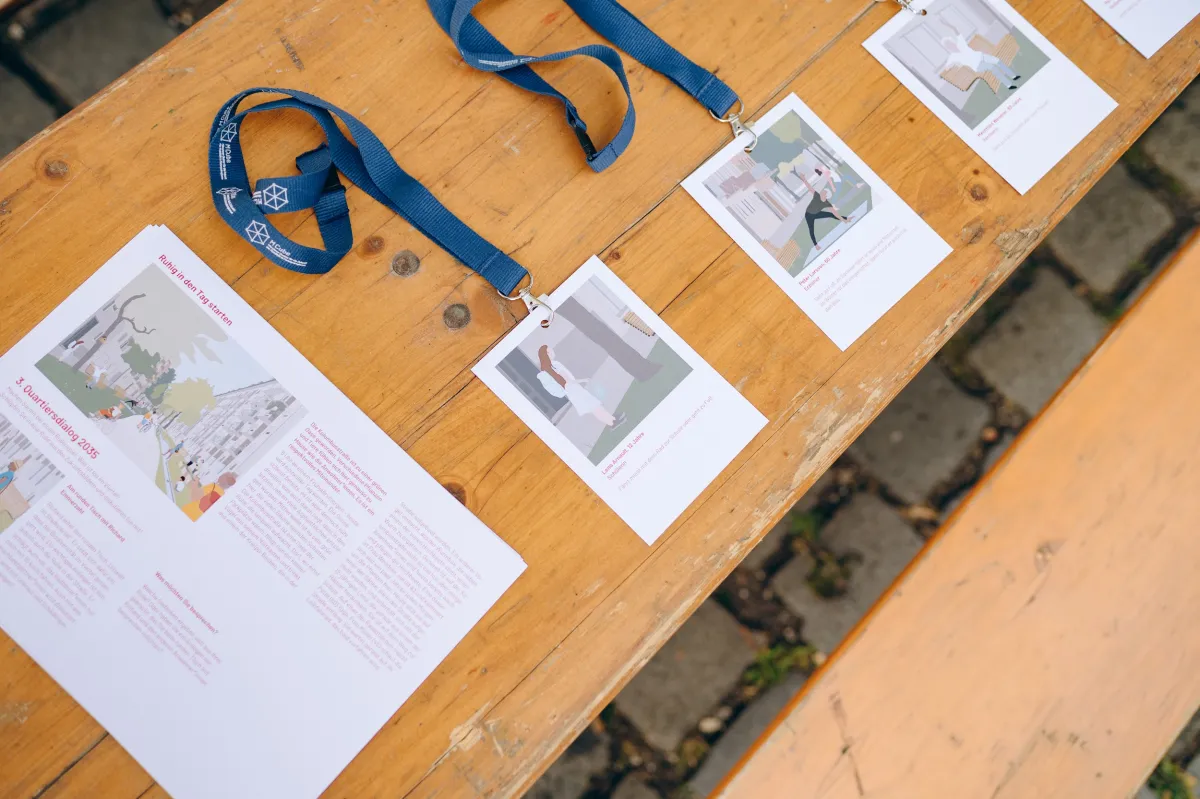
To spark the imagination and to offer the citizens a space for discourse, 15 residents were invited to join a design futuring process. In two half-day workshops the group explored trends and signals that might affect them in their neighbourhood and then jointly developed future scenarios which were illustrated and translated to narratives of neighbourhood-personas that people can relate to. The process and its findings are described in detail in our paper in Contexts – The Systemic Design Journal.
Futures Forum
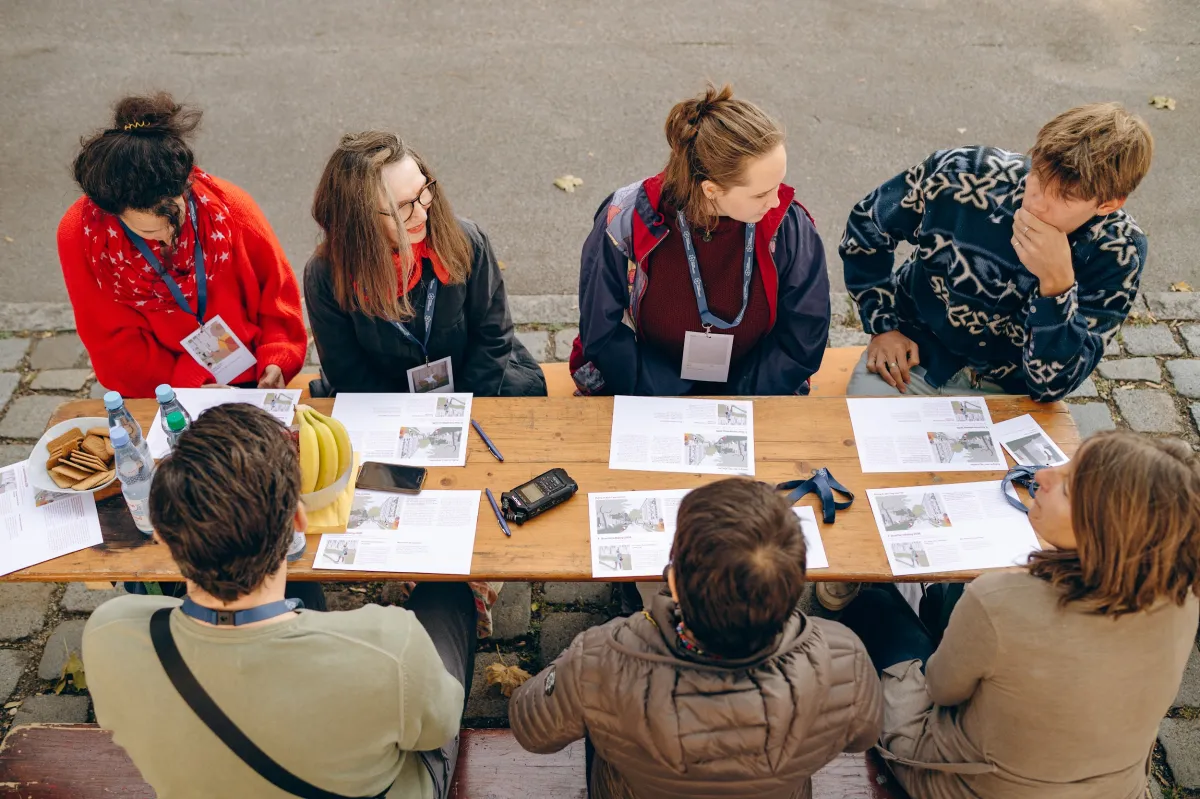
These images of the future, in the form of illustrated scenarios and storyboards, served a larger group as an entry point to a value negotiation of preferable futures during a Futures Forum open to the public in October 2023.
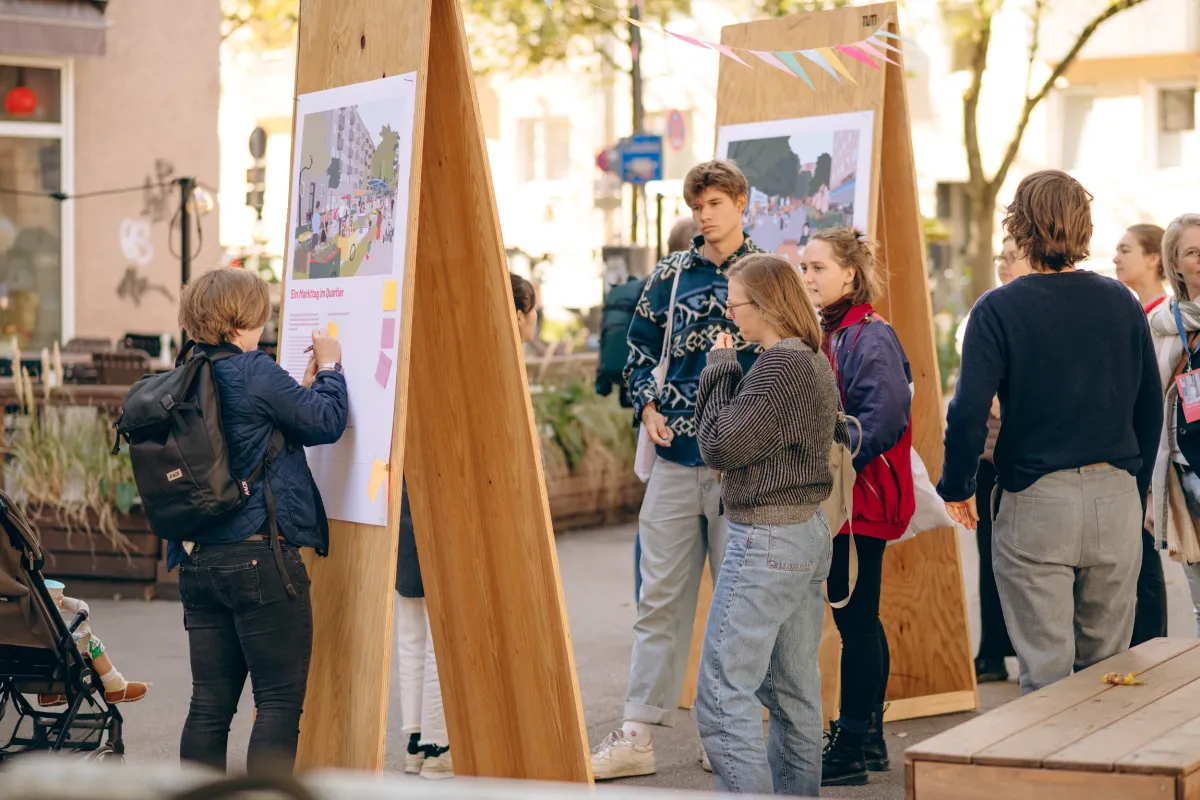
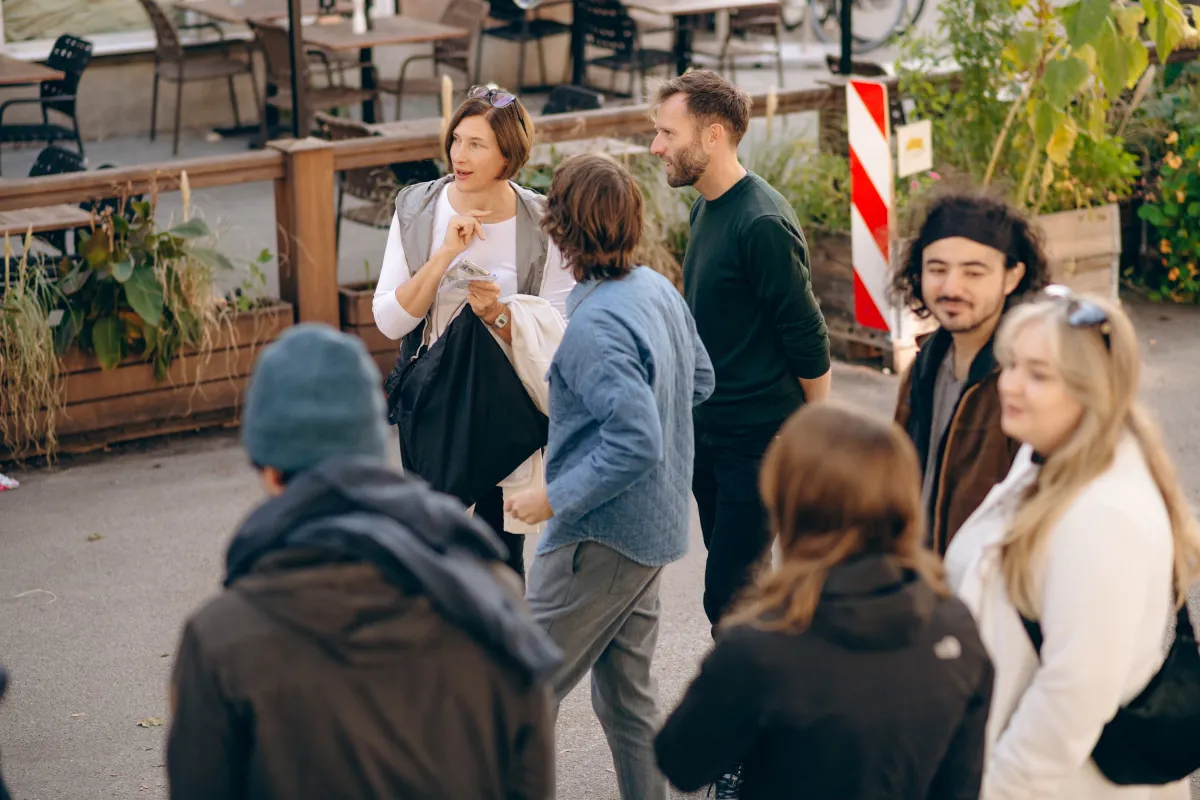
Besides the exhibition, the neighbourhood came together to exchange pros and cons and conflicting perspectives during a role play guided by professional actors of local improv theatres.
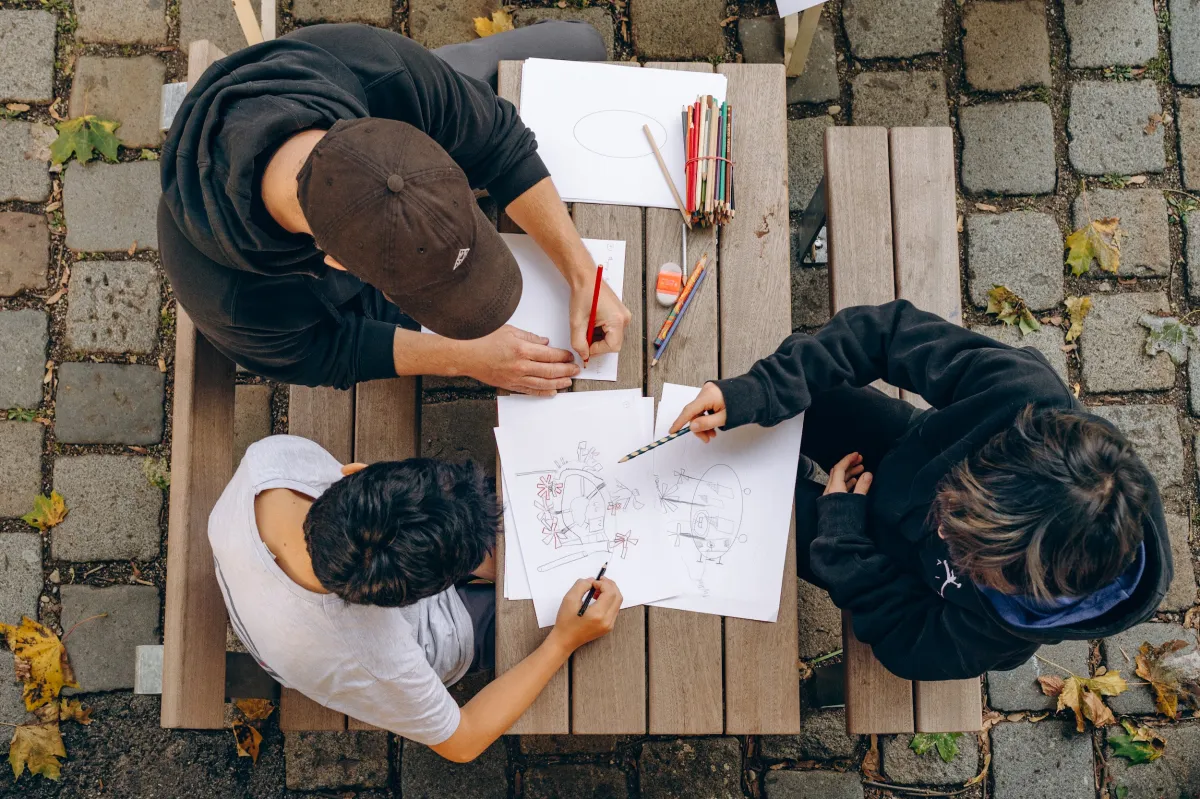
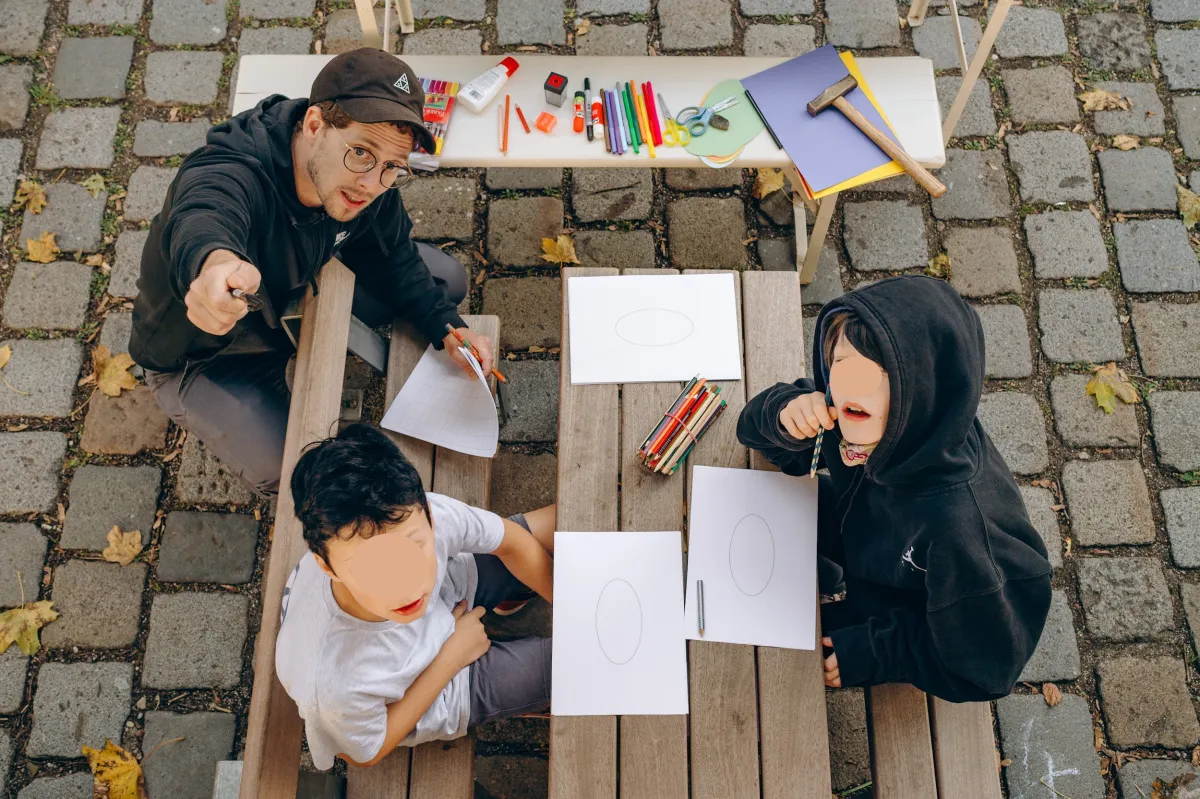
The youngest members of the neighbourhood could express their wishes and images of the future at an AI-aided »Kinderwerkstatt«, a format by students of the Faculty of Design of the Hochschule München. It explored how children see and draw the city of the future and used generative AI to translate their drawings into photo-realistic images, which are harder to dismiss in the adult political discourse.
Project facts
- Our role: Design and facilitation of futures workshop (July 2023) and futures forum (October 2023), art direction of the visualisation of scenarios and storyboards
- Project team Futures Workshop & Futures Forum: Dr. Marco Kellhammer, Dr. Stefanie Ruf, Prof. Dr. Eileen Mandir
- Project partners aqt: Hans Sauer Stiftung, Bayerische Hausbau, Aimsun, SIXT, ChargeX, Technische Universität München, Landeshauptstadt München, Stadtwerke München
- Commissioned by: MCube Münchner Cluster für die Zukunft der Mobilität in Metropolregionen, Bundesministerium für Bildung und Forschung (BMBF)
- Publication: Kellhammer, M., Ruf, S., & Mandir, E. (2026). Negotiating Urban Mobility Futures: Collaborative design futuring with residents in two Munich neighbourhoods. Contexts – The Systemic Design Journal, 3.