
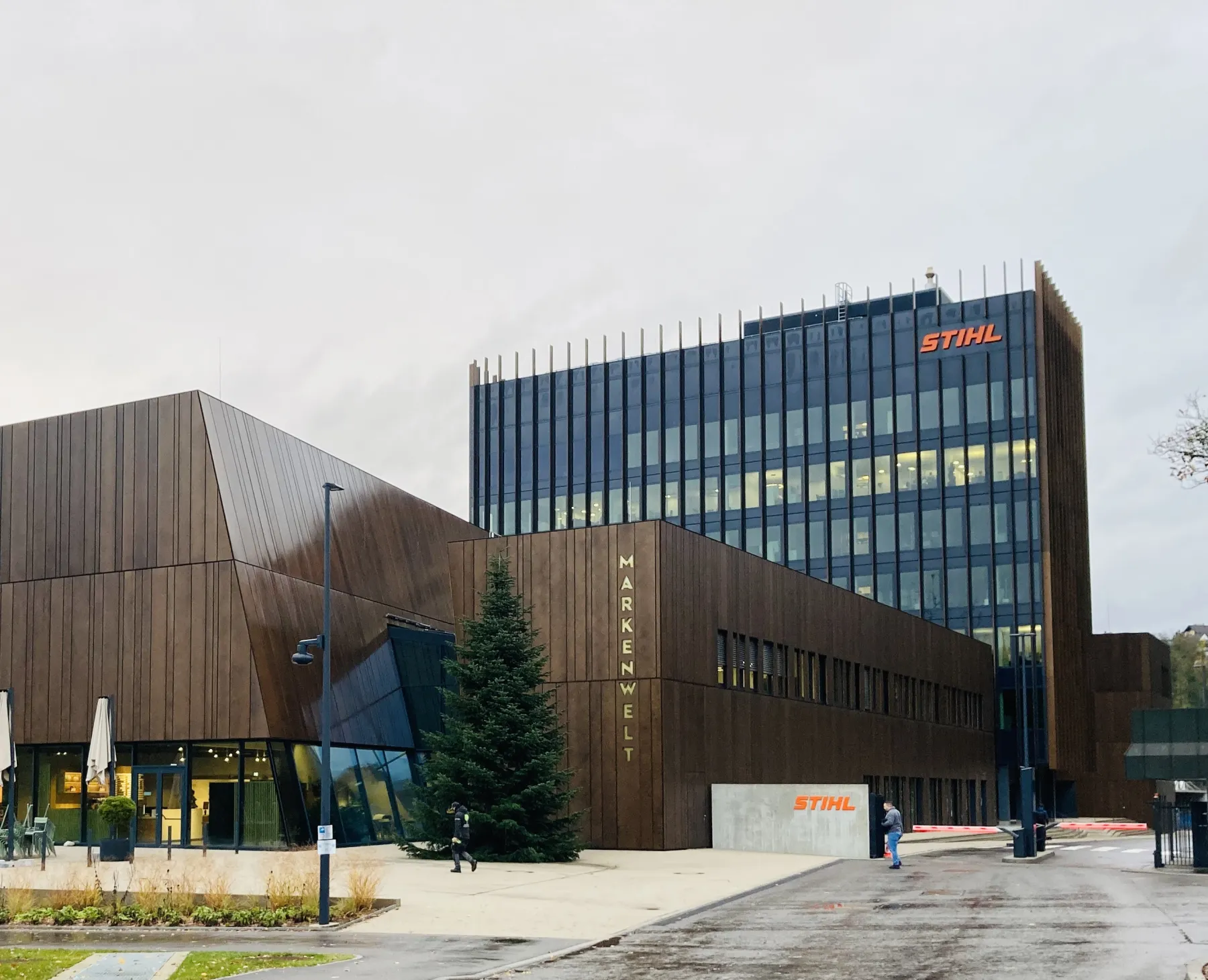
STIHL – Exploring the transformation of forestry, gardening, and urban landscapes
How will emerging technologies and climate change transform what is planted, cultivated, and harvested in our forests, gardens and cities?
The STIHL Group develops, manufactures and distributes power tools for forestry and agriculture, landscape maintenance, the construction industry and gardening enthusiasts around the globe. Founded by Andreas Stihl in Cannstatt, Baden-Württemberg, in 1926, the company has carried innovation and sustainability in its DNA from the start — a lineage that runs from early advances in chainsaw engineering to today's shift toward battery-powered and more resource-efficient tools.
Context
Companies increasingly need to understand how emerging technologies will impact their business and markets. While most companies' innovation processes and strategic planning are well established, they leave little room for thinking about the future in an open-ended and explorative way. As the future of a company is a highly emotional topic, there is a growing need to involve internal stakeholders in a participatory sense-making process — one that builds ownership and momentum for actively shaping the transitions a desirable future requires. For STIHL – as a global player – design futuring has the potential to leverage their own diverse perspectives and expertise in a collaborative, robust and method-based process.
Design Futuring Workshops
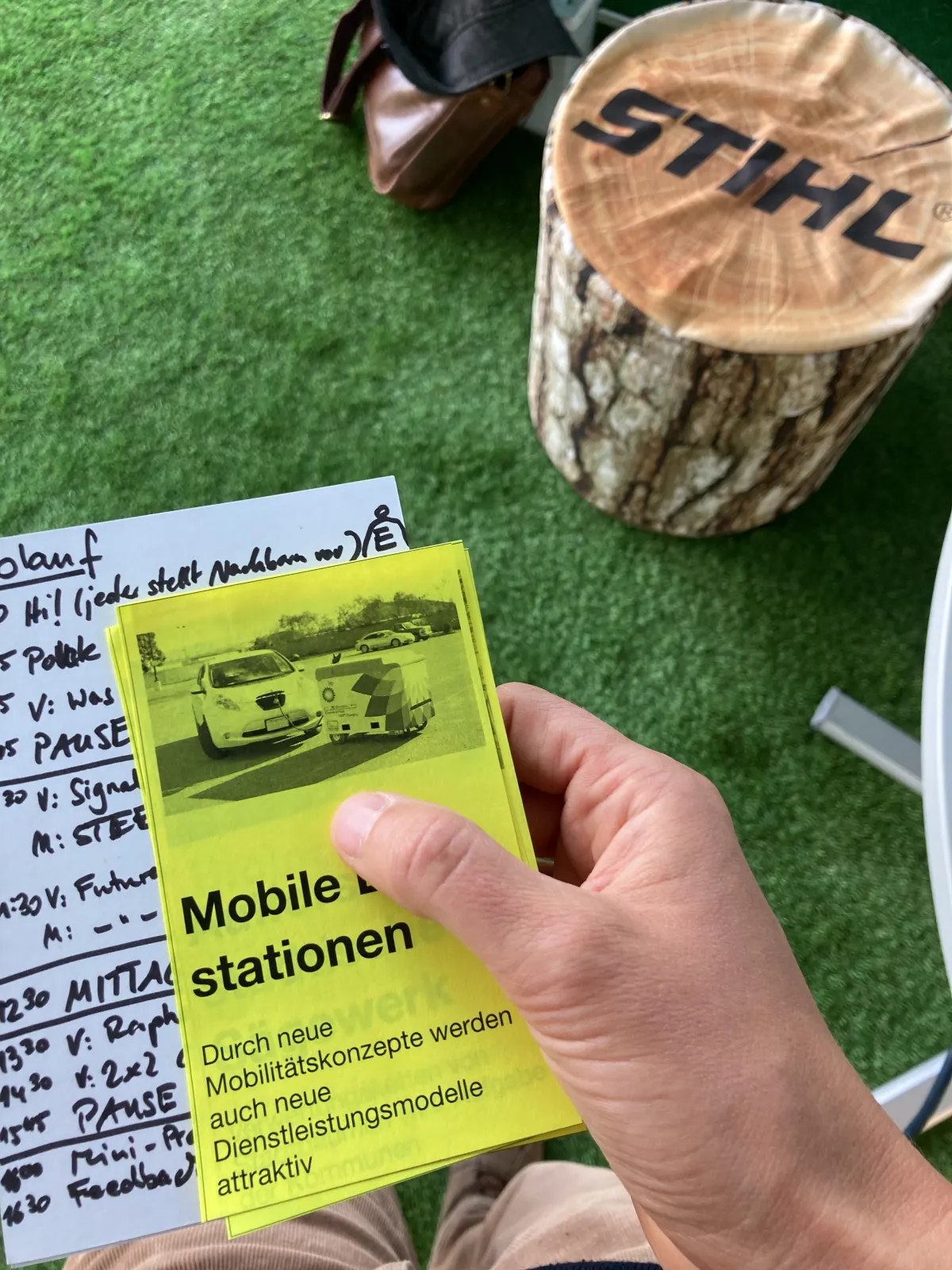
Intense in-person, one-day workshops bring together diverse stakeholders and decision-makers from strategy, engineering, product management and sales, together with customers and external experts.
Each workshop follows a hands-on, method-based design futuring process: defining the briefing, signals and horizon scanning, extrapolating future consequences and assumptions, exploring possible scenarios and visualising them — moving between plenary discussion and work in smaller groups. Subsequent half-day follow-up workshops help to refine the scenario visualisations and the understanding of the broader consequences, which feed the value negotiation on desirable futures and generate insights on possible transition pathways for strategic planning.
Outcomes
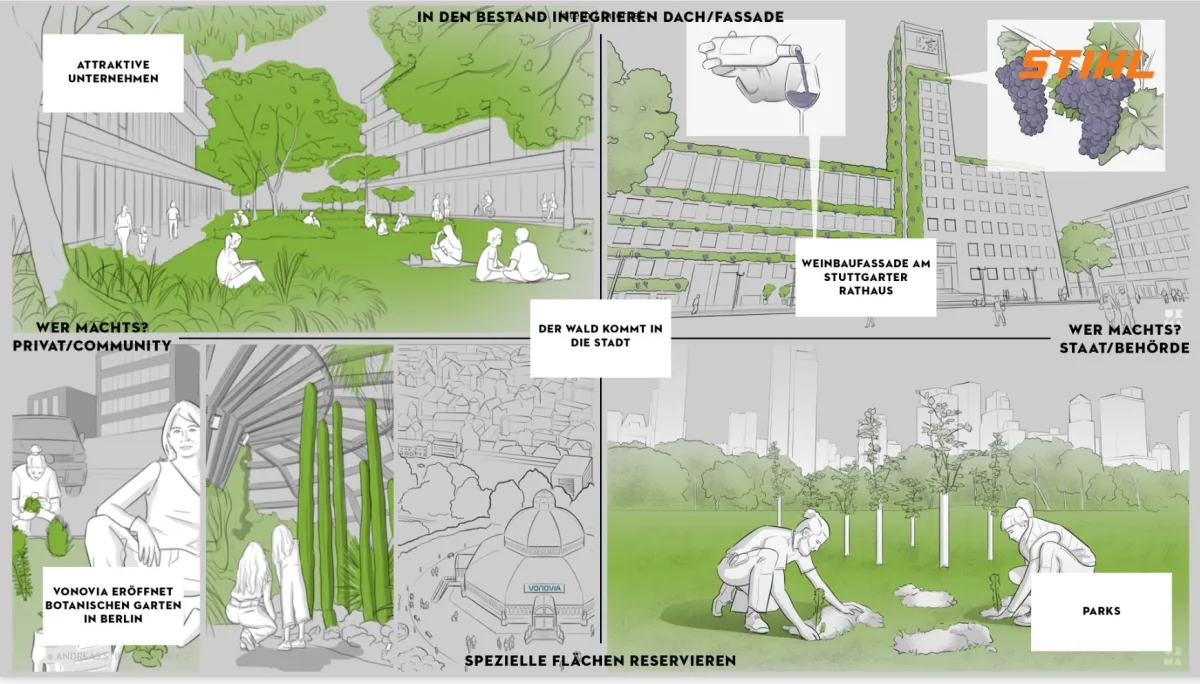
Each workshop produces tangible future scenario visualisations and a communication package for further value negotiation in board meetings and strategy processes — together with possible transition pathways across the three time horizons.
Programme development
Involving all STIHL departments and units worldwide in this discourse, on a regular basis, called for more than a one-off workshop. Studio Zg developed the format into a programme — including methods, workshop materials and Train-the-Trainer seminars — so that design futuring feeds into STIHL's yearly strategy cycle and can be deployed at the fuzzy front end of ongoing innovation processes, bridging strategy, product management, engineering and sales.
Project facts
- Pilot workshops: 2021 and 2022
- Train-the-Trainer seminar and programme development: 2023
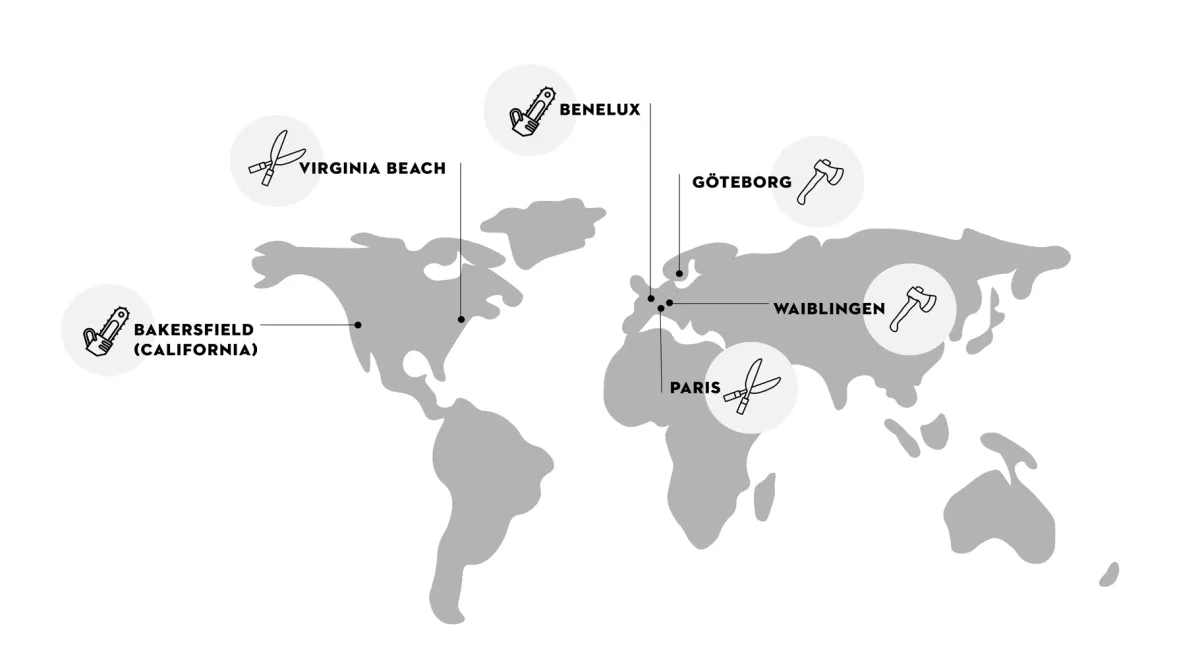
- Ongoing roll-out of workshops across STIHL's global regions and headquarters since 2024
- Impact: engineering innovations, product ideas, and regular contributions to strategic decision-making
- Role Studio Zg: Process design, workshop concept and moderation, art direction scenario visualisation, strategic communication material, Train-the-Trainer seminars, programme development for international roll-out
- Project team: Götz Wintergerst, Sabrina Leicht, Benedikt Groß, Eileen Mandir
- Visualisation: UXMA
- Commissioned by: ANDREAS STIHL AG & Co. KG